
Cornice Crushing – Why Is My Cornice Cracking, Bulging or Sagging?
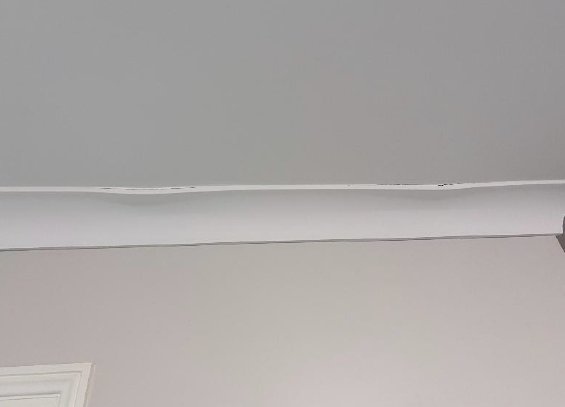
Have you noticed your cornices cracking, bowing downwards or separating from the ceiling? While it may appear to be a minor cosmetic defect, it could be a sign of movement within your home.
One cause of this type of damage is a condition known as cornice crushing, also referred to as truss crush.
At My Repairbuild, we believe it is important to investigate the underlying cause of building damage rather than simply repair the visible symptoms.
What Is Cornice Crushing?
Cornice crushing occurs when downward pressure from the roof framing is transferred onto the cornice and internal partition walls.
In many residential homes throughout Brisbane and South East Queensland, timber roof trusses are designed to transfer roof loads onto the external loadbearing walls, rather than the internal non-loadbearing partition walls.
When the external walls and internal walls move at different rates, the roof trusses can apply unintended pressure to the internal walls and cornices, resulting in visible damage.
What Causes Cornice Crushing?
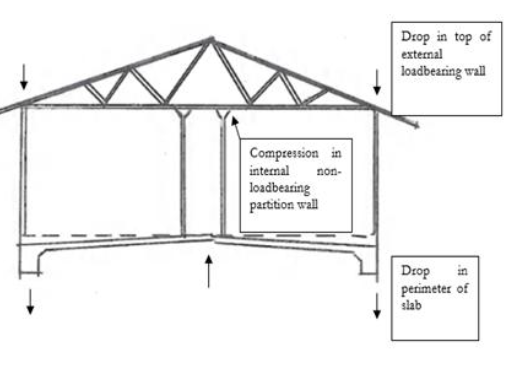
One of the causes of cornice crushing is differential foundation movement.
Many properties throughout South East Queensland are constructed on reactive clay soils. These soils can expand when they absorb moisture and contract as they dry out.
The ground around the perimeter of a building is generally more exposed to seasonal moisture fluctuations than the ground beneath the centre of the slab.
As the perimeter of the slab settles relative to the centre:
- The external loadbearing walls can move downwards.
- The roof trusses can lower relative to the internal partition walls.
- The clearance between the roof trusses and internal wall framing can reduce.
- Pressure can be transferred onto the internal walls and cornices.
- The cornices can crack, distort or bulge downwards.
This type of movement can develop gradually over several years.
What Are the Signs of Cornice Crushing?
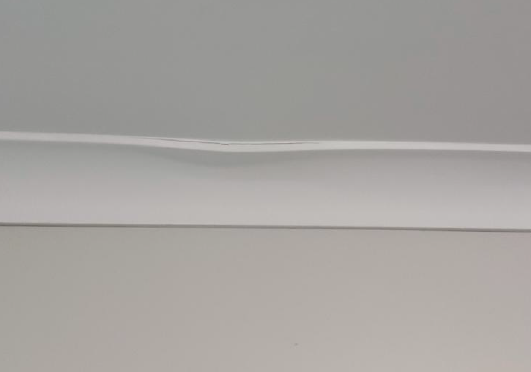
Common signs that may indicate cornice crushing include:
- Cornices bowing or bulging downwards.
- Horizontal cracking along the top or bottom of the cornice.
- Localised crushing at roof truss locations.
- Cornices separating from the ceiling.
- Cracking above internal doorways.
- Previously repaired cornices cracking again.
- Distortion at the junction between the wall and ceiling.
The damage may be isolated to particular rooms or sections of internal walls, rather than occurring throughout the entire property.
Is My Damaged Cornice Caused by a Roof Leak?
Not necessarily.
While water ingress can cause plasterboard and cornice deterioration, similar-looking damage can also result from building movement.
Moisture testing can assist in determining whether active moisture is present. However, a dry moisture reading alone does not rule out previous or intermittent water ingress.
It is important to consider the pattern of damage, the condition of the roof framing and whether there are other indications of building movement.
Why Is It Important to Inspect the Roof Cavity?
Where safe and accessible, inspecting the roof cavity can provide valuable information when investigating cornice crushing.
An investigation may include assessing:
- The direction and location of the roof trusses.
- The clearance between the bottom chord of the roof truss and the internal wall top plate.
- The condition and installation of truss hitch brackets.
- Whether the roof trusses are bearing onto non-loadbearing internal walls.
- Evidence of compression or distortion within the framing.
- Whether the visible cornice damage corresponds with the location of the roof trusses.
Hitch brackets are designed to provide lateral restraint to internal partition walls while accommodating the vertical movement permitted by their design.
Where significant foundation movement is suspected, a floor level survey and structural engineering assessment may also be recommended.
Can Cornice Crushing Be Repaired?
Yes. However, the appropriate repair method will depend on the underlying cause and whether movement is ongoing.
Simply removing and replacing the damaged cornice without addressing the pressure being applied to it may result in the damage recurring.
Depending on the findings of an investigation, repairs may involve:
- Rectification of inappropriate contact between roof trusses and internal walls.
- Rectification of unsuitable or damaged truss connections.
- Addressing contributing factors associated with foundation movement.
- Removal and replacement of damaged cornices.
- Repairs to affected plasterboard wall and ceiling linings.
- Repainting of affected areas.
Any alterations to structural roof framing or connections must be undertaken in accordance with appropriate engineering requirements.
Is Cornice Crushing a Serious Structural Problem?
Not every instance of cornice crushing indicates a major structural problem.
Some building movement can occur naturally as a result of seasonal changes in soil moisture. However, significant, progressive or recurring damage should not be ignored.
Identifying the cause and extent of the movement is an important step in determining whether cosmetic repairs are sufficient or more extensive rectification works are required.
Cornice Crushing Investigations and Repairs in Brisbane
At My Repairbuild, we understand that repairing the visible damage is only one part of the solution.
With over 35 years of experience in the building repair industry, we understand the importance of investigating why building damage is occurring before recommending a suitable repair method.
We assist homeowners, body corporates and property managers throughout Brisbane with building investigations, remedial building works, ceiling repairs and cornice repairs.
If you have noticed cracking, bulging or sagging cornices at your property, contact our team to discuss how we may be able to assist.
My Repairbuild – Investigating the cause, not just repairing the damage.
Phone: 07 3290 2900
Email: service@myrepairbuild.com.au
Website: www.myrepairbuild.com.au